Now Reading: Cat Peeing Outside the Litter Box? Causes and Fixes
- 01
Cat Peeing Outside the Litter Box? Causes and Fixes

Certified veterinarian. Last reviewed and updated: November 10, 2026. See our editorial and veterinary review policy.
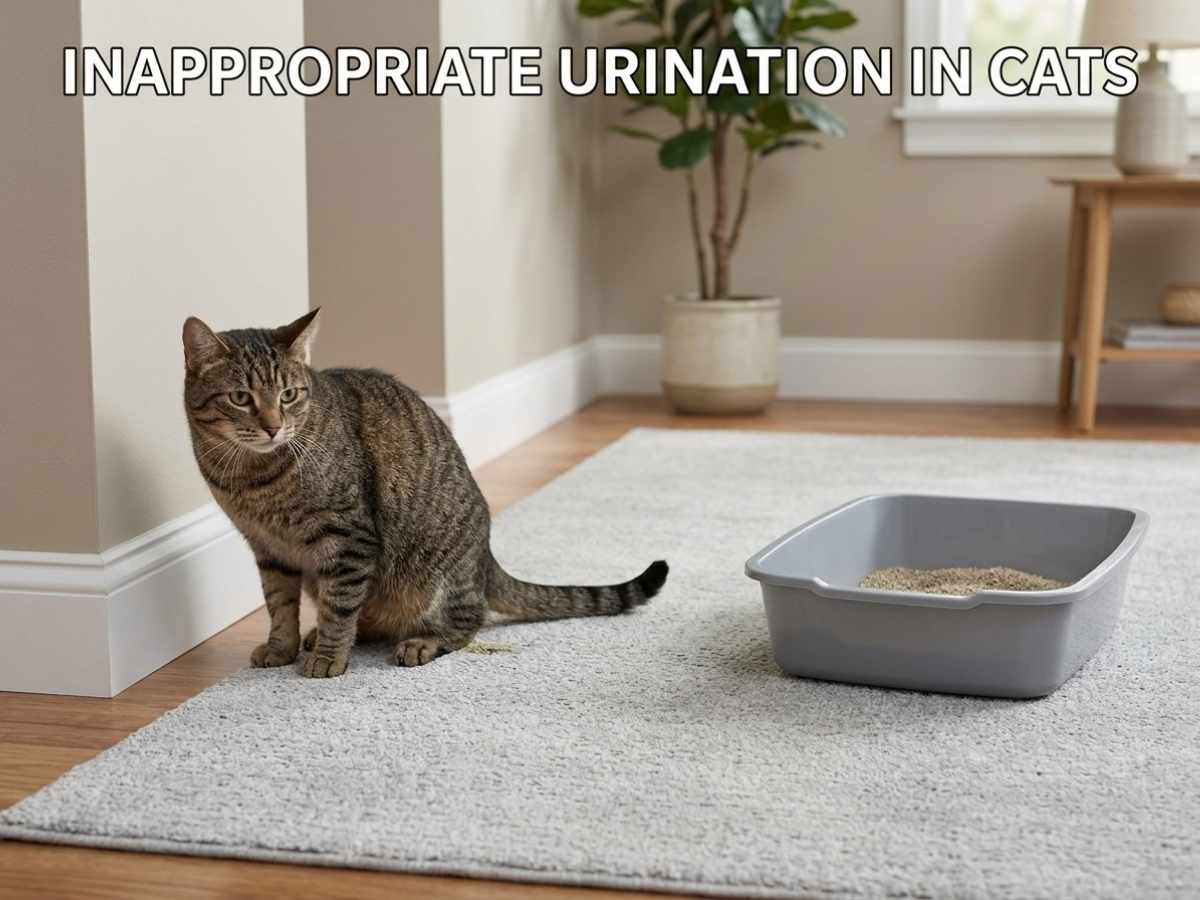
Your cat walks past a perfectly good litter box and chooses the bath mat instead. It is frustrating, smelly, and rarely an act of spite.
Cat peeing outside the litter box is one of the most common reasons owners seek vet help, and the cause is usually solvable. Medical problems, a litter box your cat dislikes, and stress sit behind nearly every case.
Punishment never fixes it. Only the real trigger does, so start with the checklist below.
Rule Out Health Problems First
Pain or urgency can make a cat link the litter box with discomfort. Vets call this inappropriate urination in cats, and a medical cause turns up in many cases.
- Cat urinary tract infection or bladder inflammation (cystitis)
- Bladder crystals or stones
- Kidney disease or diabetes, which raise thirst and urine volume
- Arthritis, which makes stepping into a high-sided litter box painful
- Age-related confusion in senior cats
Male cats straining with little or no urine need emergency care. Blocked urethras can turn fatal within a day or two, so never wait for a routine appointment.
Blood in the urine, frequent trips to the litter box, crying while peeing, or constant licking of the genitals all deserve a vet visit this week.
Expect a urine test, a physical exam, and sometimes an ultrasound or X-ray. Treatment ranges from antibiotics and pain relief to a prescription urinary diet.
Encourage drinking with a water fountain and extra wet food. Dilute urine lowers the risk of crystals and bladder inflammation.
Is Your Cat Rejecting the Litter Box?
Litter box aversion is the next big suspect. Cats are picky, and small changes matter more than owners expect.
| Problem | Why cats dislike it | Quick fix |
|---|---|---|
| Dirty litter box | Strong smell and soggy litter | Scoop daily, wash weekly |
| Covered box | Traps odor and feels cornered | Remove the lid |
| Scented litter | Perfume irritates the nose | Switch to unscented clumping |
| Box too small | No room to turn or dig | Choose one 1.5 times body length |
| Noisy location | Fear of being startled | Move it to a quiet corner |
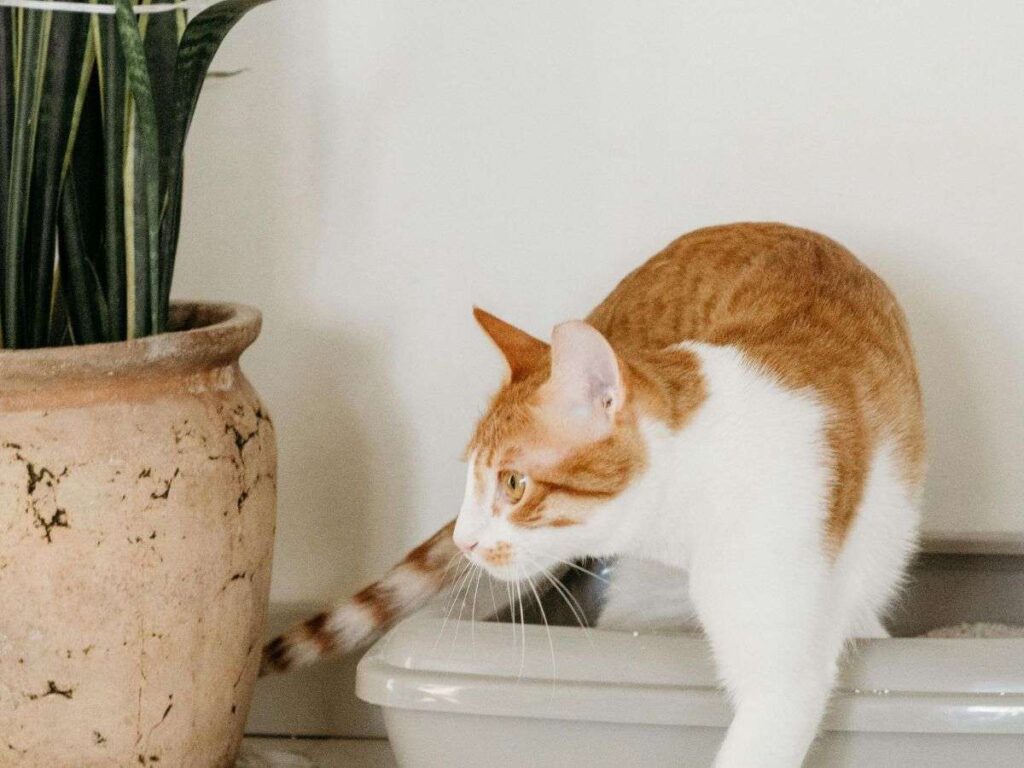
How many litter boxes do you need? Provide one per cat, plus one extra, spread across different rooms. Litter boxes lined up side by side count as a single option to your cat.
Place litter boxes away from washing machines, food bowls, and busy hallways. Cats want a quiet spot with a clear exit route and a view of the room.
Fill each box 2 to 3 inches deep with litter. Most cats dislike rustling liners and sudden brand swaps. Kittens and arthritic seniors do best with a low-entry litter box.
Stress and Territory Triggers
Cats thrive on routine. New pets, rearranged furniture, visitors, or strays outside the window can all unsettle them.
- Provide hiding spots and high perches
- Plug in a feline pheromone diffuser
- Keep feeding and play times steady
- Block the view of outdoor cats with frosted window film
- Place an extra box near the spot your cat keeps targeting
Urine marking differs from regular peeing. Sprayers back up to a vertical surface and release small amounts. Neutered cats can still spray, so the habit needs its own plan.
In multi-cat homes, one cat may guard the litter box. Watch for blocking at doorways, and add boxes in separate rooms so every cat has a free path.
Clean Up So It Doesn’t Happen Again
Cats return to spots that still smell of urine, even faintly. Standard cleaners only mask the scent for humans.
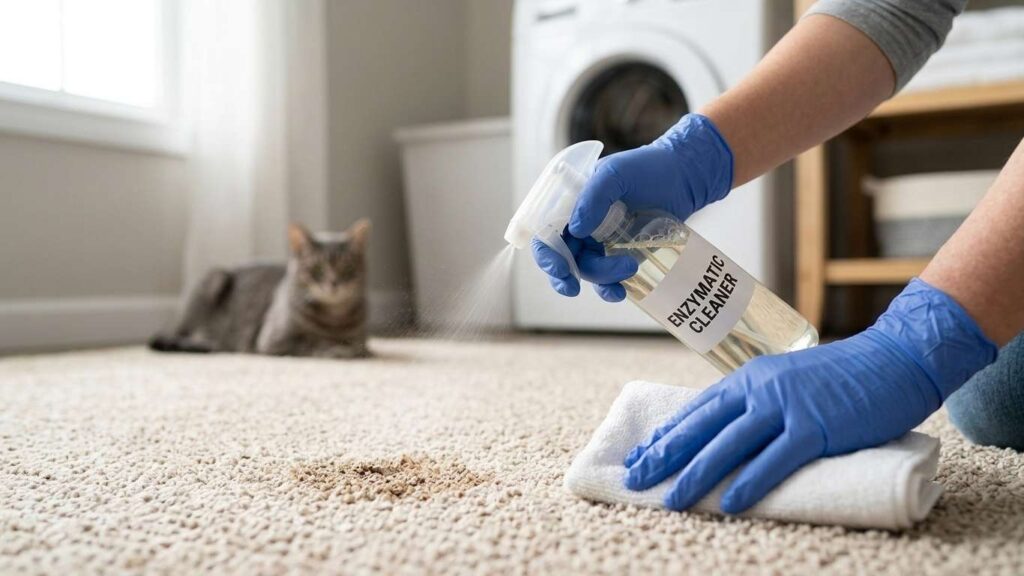
Use an enzymatic cleaner, which breaks down the uric acid that lingers. Skip ammonia products, because ammonia smells like urine to a cat.
Wash the spot first, then apply the cleaner and let it air dry fully. Hard scrubbing or steam cleaning can set the odor deeper.
Block access to the old spot for a few weeks with foil or double-sided tape. Some owners turn the area into a feeding spot, since cats rarely eliminate where they eat.
Soiled fabric? Our guide on getting cat pee smell out of clothes covers washable items.
Your Step-by-Step Action Plan
Skip rubbing noses in accidents or shouting. Fear makes the problem worse and damages trust. Change one thing at a time so you can tell what worked.
- Book a vet check and bring a fresh urine sample if possible.
- Add litter boxes and switch to unscented clumping litter.
- Scoop once or twice a day.
- Clean every accident spot thoroughly.
- Note the time, place, and any household changes in a diary.
Bring notes on drinking habits, appetite, stool quality, and when accidents began. Photos or a short video of your cat’s posture help too.
Cat peeing outside the litter box beyond 4 weeks of changes needs another vet review. Not sure where to start? Schedule a checkup with your vet this week.
Want more practical guidance? Browse our cat care guides for your next read. If your cat seems unwell in other ways, see our post on why a cat vomits.
Questions Cat Owners Keep Asking
Many cats improve within 2 to 4 weeks once the trigger is found. Medical cases may settle faster after treatment.
Soft, absorbent surfaces that carry your scent feel safe to a stressed cat. Rule out a medical issue first, then reduce stress and add a litter box nearby.
Most cats favor fine-grained, unscented clumping litter because it feels close to sand. Change brands gradually over a week.
Altered cats spray far less often. Surgery won’t cure medical or box-related causes, though.
Anxiety disrupts routine and makes the litter box feel unsafe. Chronic stress can also trigger bladder inflammation, so both problems often overlap.
Head to a clinic right away if your cat strains without producing urine, cries in the litter box, or has a hard, painful belly. Male cats face the highest risk.
General information only: your own vet should examine any cat that keeps urinating outside the litter box.
Related Posts
Previous Post
Next Post