Now Reading: Cat Not Eating? Causes, Tips and When to Call a Vet
- 01
Cat Not Eating? Causes, Tips and When to Call a Vet

Certified veterinarian. Last reviewed and updated: November 10, 2026. See our editorial and veterinary review policy.
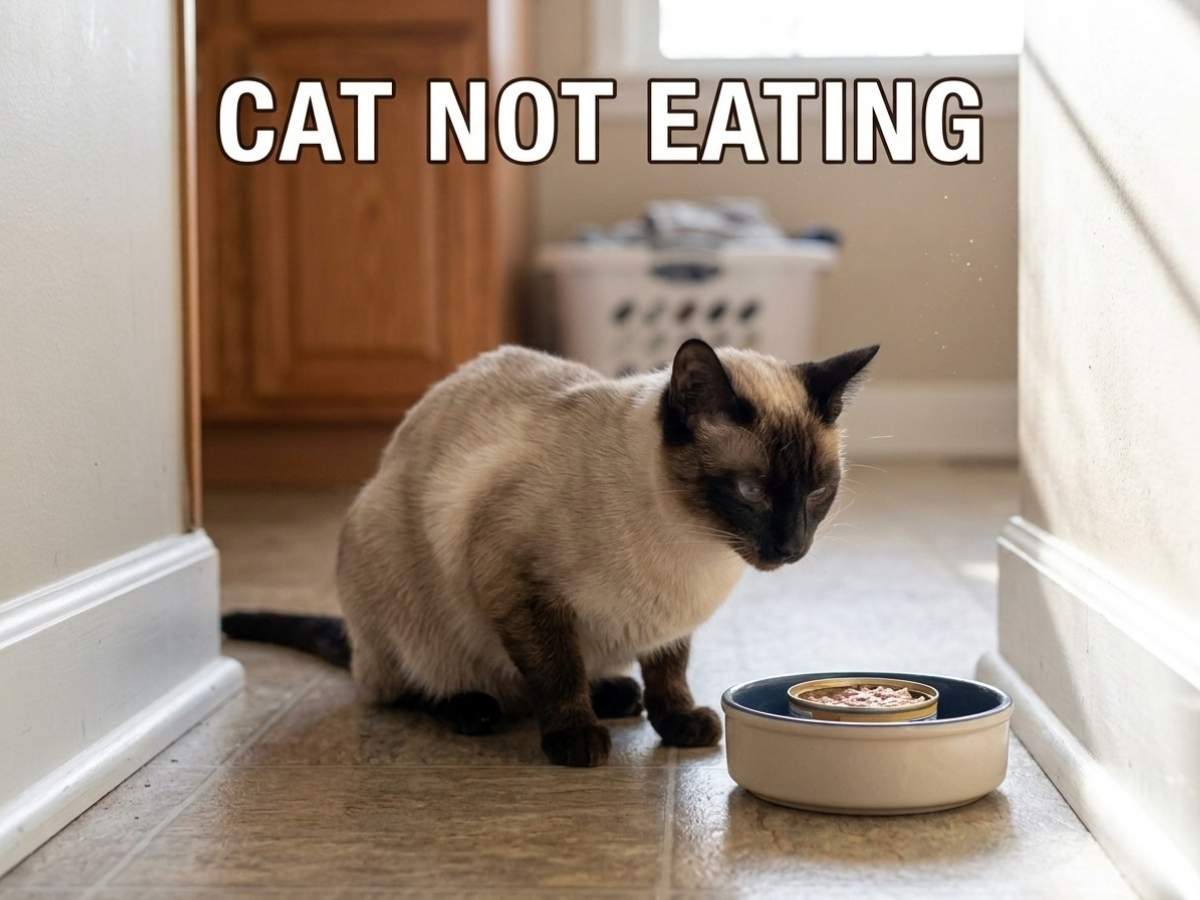
Your cat sniffs the bowl, turns away, and walks off. Skipped meals happen, but a cat that refuses food for a full day needs a closer look. Cat not eating is a symptom, not a diagnosis. Behind it sits anything from a stuffy nose to a serious organ problem.
Cats also face a unique danger when they fast. Their liver struggles to process mobilized body fat, which can trigger a dangerous condition within days.
Why Cats Turn Their Noses Up
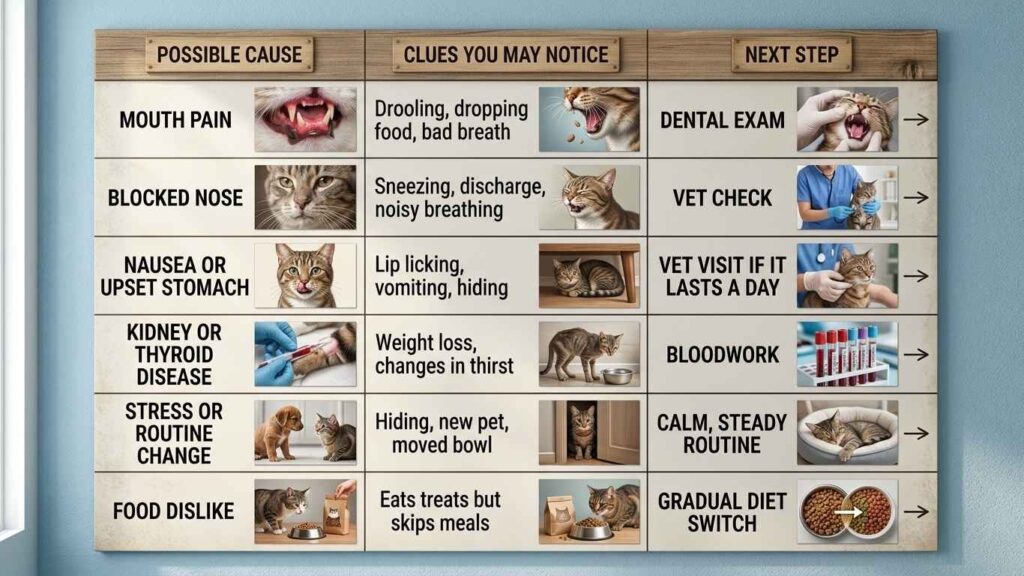
Loss of appetite in cats falls into two groups. Some cats don’t want food, while others want it but can’t eat comfortably.
| Possible cause | Clues you may notice | Next step |
|---|---|---|
| Mouth pain | Drooling, dropping food, bad breath | Dental exam |
| Blocked nose | Sneezing, discharge, noisy breathing | Vet check |
| Nausea or upset stomach | Lip licking, vomiting, hiding | Vet visit if it lasts a day |
| Kidney or thyroid disease | Weight loss, changes in thirst | Bloodwork |
| Stress or routine change | Hiding, new pet, moved bowl | Calm, steady routine |
| Food dislike | Eats treats but skips meals | Gradual diet switch |
Dental disease in cats is a common hidden cause, since sore gums make crunchy kibble painful. Cats rarely show mouth pain, so bad breath or dropped food is often the only hint.
Recent vaccinations or new medicines can dull appetite for a day or so. Check the leaflet, and phone your vet if it lasts longer.
Smell matters just as much. Cats with blocked noses often refuse food they can’t smell, even when hungry.
New homes, new babies, or changes in work hours can all unsettle a sensitive cat. Keep routines steady and offer a hiding spot near the food.
If vomiting joins the picture, read our guide on why a cat vomits for the warning signs.
How Long Is Too Long Without Food?
Healthy adult cats shouldn’t go without food for more than 24 hours. Past 2 days, call your vet immediately.
Kittens, seniors, and cats with other illnesses have even less time. Contact your clinic the same day if any of them skip meals.
Hepatic lipidosis, or fatty liver, develops when body fat floods the liver faster than it can cope. Overweight cats face the highest risk, so a plump cat that stops eating isn’t safe to watch and wait.
Early signs include weight loss, drooling, and yellowing of the gums. Treatment works best when it starts early, so timing matters more than the exact diagnosis.
Gentle Ways to Tempt a Reluctant Eater
Try these steps while you arrange a vet visit, and check with your vet before continuing them for long:
- Warm the food to about body temperature so the aroma rises.
- Offer a few canned flavors in small, frequent portions.
- Stir in a spoonful of low-sodium broth that is free from onion and garlic.
- Place food in a quiet, clean spot away from the litter box.
- Hand-feed small bites if your cat accepts them.
Never force-feed. Forced feeding risks aspiration pneumonia and builds fear around mealtime. Skip human medicines too, since acetaminophen is toxic to cats.
Smell drives feeding. Gently wipe a crusty nose with a warm, damp cloth, and offer fish-based or strongly scented food.
Real picky eaters still eat something every day and keep a steady weight. Cats that refuse nearly everything are unwell until proven otherwise.
Red Flags That Mean Go Now
- No food for more than 24 hours, or any skipped meal in a kitten
- Repeated vomiting or diarrhea
- Yellow tint to the gums, eyes, or ears
- Hunched posture, hiding, or crying
- Fast or open-mouth breathing
- Far more or less drinking and urinating than usual
If any of these sound familiar, call your vet now rather than waiting until tomorrow.
Inside the Vet Visit
Your vet will check your cat’s mouth, weight, hydration, and belly. Bloodwork, urine tests, and sometimes imaging help pin down the cause.
Treatment targets the root problem, such as dental work, anti-nausea medicine, or fluids. Short-term help may include an appetite stimulant, but only on veterinary advice. Severely ill cats sometimes need a feeding tube for a brief period.
Your vet may suggest syringe feeding or a recovery diet at home. Follow the plan exactly, since the wrong technique can cause choking.
Bring notes on what your cat ate, when it stopped, and any other changes at home. Those details speed up the diagnosis.
Habits That Protect Your Cat’s Appetite
Weigh your cat monthly, keep dental care up to date, and change foods gradually over 7 to 10 days. Track meals so you notice dips early.
Rotate between 2 or 3 flavors so your cat doesn’t tire of a single food, yet keep any prescription diet unchanged.
Keep bowls away from noisy appliances, and wash them daily. Cats dislike stale food and strong cleaning scents.
Want more practical guidance? Browse our cat care guides for your next read. For long-term wellbeing, see our guide to the best cat supplements and ask your vet first.
Questions Cat Owners Keep Asking
Healthy adults shouldn’t fast beyond 24 hours, and 2 days is a call-the-vet-now point. Kittens, seniors, and overweight cats have less time.
Cats that drink but won’t eat often have nausea, mouth pain, or kidney trouble. Water can’t replace nutrition, so book a vet visit.
Warmed wet food, plain cooked chicken, or tuna in spring water often tempt cats briefly. Treat them as short-term helpers and ask your vet first.
Mix old and new food over 7 to 10 days, raising the new share slowly. Sudden changes can upset the stomach and put cats off their bowl.
Kittens have tiny energy reserves, so a refused meal or two should prompt a same-day call to your vet, especially if the kitten seems weak, cold, or sleepy.
General information only: your own vet should examine any cat that stops eating.
A stuffy nose can also kill a cat’s appetite, so see why cats sneeze and when to worry.
Sources and Further Reading
Related Posts
Previous Post
Next Post