Now Reading: How to Get Cat Pee Smell Out of Clothes: 5 Easy Steps
- 01
How to Get Cat Pee Smell Out of Clothes: 5 Easy Steps

Certified veterinarian. Last reviewed and updated: November 10, 2026. See our editorial and veterinary review policy.
Few smells cling like cat urine on fabric. Hoodies, jeans, and throw blankets all seem to attract accidents, and plain detergent often leaves the odor behind. Here is how to get cat pee smell out of clothes using steps that match the chemistry, plus when a vet should step in.
Short version: rinse in cold water, soak in an enzyme cleaner, wash, then air dry. Skip hot water and the dryer until the smell is gone.
Why Cat Urine Odor Lingers
Fresh urine smells mostly of ammonia, which fades. Stubborn odor comes from uric acid, a crystal that bonds to fibers and wakes up with humidity. Plain detergent does not dissolve it, so the smell returns on damp days. Bacteria feeding on leftover residue make things worse.
Gather Your Supplies First
- Paper towels or an old white cloth
- Cold running water and a clean sink
- Pet stain remover with enzymes
- Plain white vinegar
- Rack for air drying away from heaters
Collect everything before you touch the garment. Speed matters, and hunting for supplies lets urine soak deeper.
How to Get Cat Pee Smell Out of Clothes
Act Fast and Blot
Lift the item and press paper towels into the wet spot. Hard scrubbing pushes urine deeper into fibers. Wash the garment separately so the smell cannot travel to clean laundry.
Rinse in Cold Water
Flush the stain from the back of the fabric with cold water. Hot water can set proteins and lock the odor in. Keep the garment damp until treatment starts.
Soak With Enzymes
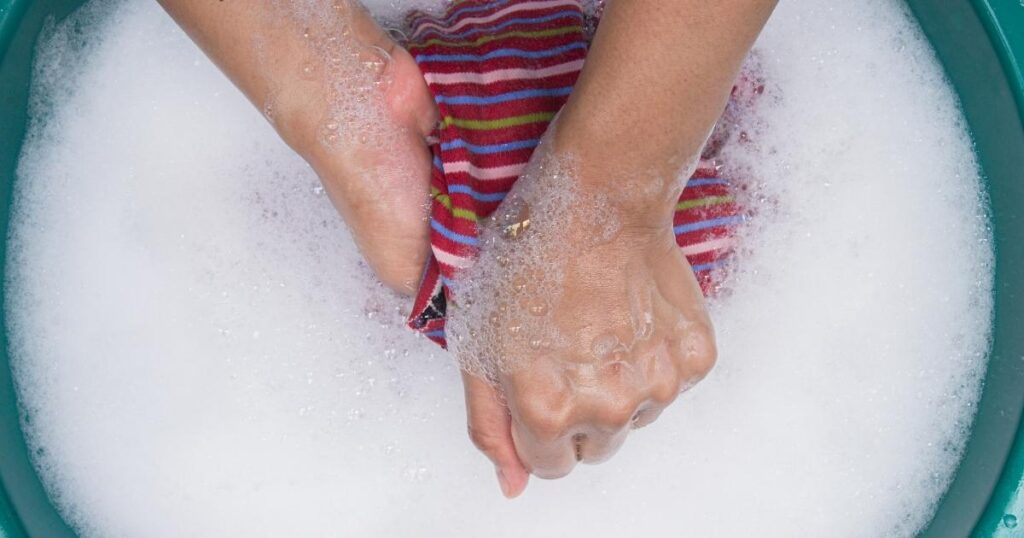
Pet-safe enzymatic cleaner is the one product I insist on. Its enzymes break urine crystals into gases that evaporate. Soak for 10 to 15 minutes, or follow the label, and test delicate fabrics on a hidden seam first.
Boost the Wash Cycle
Add baking soda to the load to absorb leftover odor, then run a plain vinegar cycle if smell remains. Both only mask odor, since neither dissolves the crystals. Use them after enzymes, never instead.
Air Dry and Sniff Test
Dry clothes on a rack or line, not in the machine. Heat can bake in any odor left behind. Sniff the fabric once dry, and repeat the soak if the smell lingers.
Hot or cold water for cat urine?
Cold water wins at the start. Hot water can set the stain and trap the odor, so keep heat out of the process until the smell has gone.
| Stage | Water | Reason |
|---|---|---|
| Rinse | Cold | Hot water can set the stain and lock odor into fibers |
| Soak | Cool to lukewarm | Keeps enzymes working without setting the stain |
| Wash | Per care tag | Run it only after the enzyme soak |
| Dry | None, air dry | Heat bakes in any leftover odor |
Warm washes are fine after an enzyme soak if the care tag allows them. Sniff the damp fabric before it goes anywhere near a dryer.
Match the Method to the Fabric
Cotton and Denim
Sturdy fabrics tolerate a full enzyme soak and a warm wash after the cold rinse. Check care tags first. Repeat the soak on seams and waistbands, where urine tends to pool.
Wool, Silk, and Delicates
Handle these gently. Skip long soaks, test products on a hidden seam, and consider a professional cleaner for dry-clean-only items. Mention that the stain is pet urine so they can pretreat it.
Stains That Already Dried
Old urine needs patience. Rewet the spot with cold water, apply the enzyme product, and cover it with plastic wrap so the cleaner stays active for several hours. Wash as usual afterward.
Find Every Hidden Spot
Handheld UV flashlights make dried urine glow in a dark room. Sweep closets, laundry piles, gym bags, and shoes so you treat every spot, not only the obvious one. Missed patches pull your cat back to the same place.
Why Cats Target Your Clothes
Soft, scented fabric carries your smell, which comforts cats and makes clothes a favorite spot when they feel stressed. House moves, a new pet, or a dirty litter box can all push a cat toward laundry piles.
Scoop boxes daily, keep one more box than you have cats, and place them in quiet corners. Cats judge cleanliness more strictly than most owners realize.
Timeline for the Full Process
Plan on about 5 minutes to blot and rinse, 15 minutes to soak, and one regular wash cycle. Air drying takes a day, and that is when you learn whether another round is needed. Patience beats rushing to the dryer.
Mistakes That Bring the Smell Back
- Ammonia cleaners, which smell like urine and lure cats back
- Hot water or a hot dryer before the odor is gone
- Scented sprays that only cover the problem
- Second washes skipped on thick fabrics like denim
Protect Your Laundry Long Term
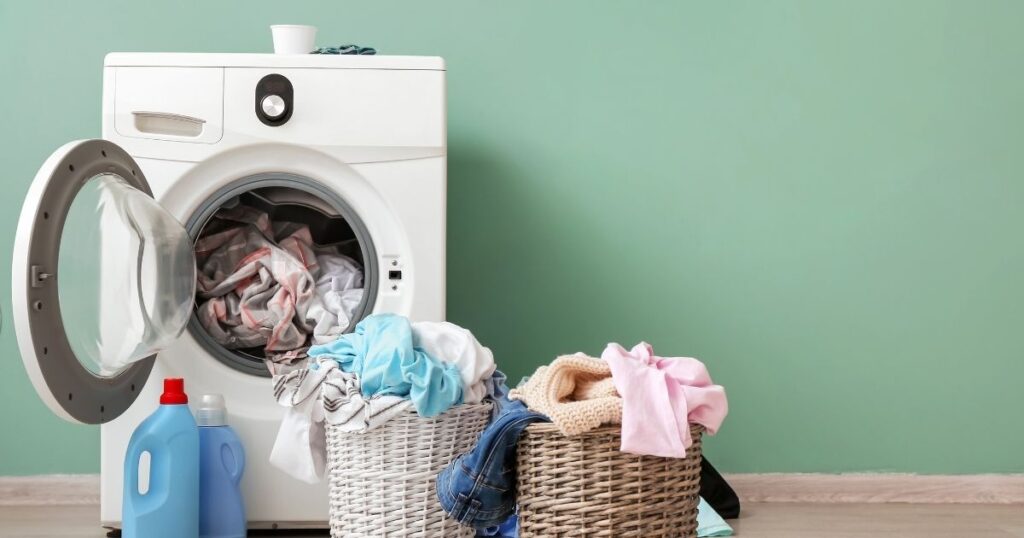
Wash blankets your cat favors weekly, and keep spare enzyme spray near the hamper. Close closet doors so clothes on the floor stay off limits. Clean any accident within hours, not days.
Keep clean clothes in closed hampers or on high shelves. Cats cannot target fabric they cannot reach.
Timely spay or neuter surgery also cuts marking, so read about the best age to neuter a cat.
When Peeing Is a Medical Sign
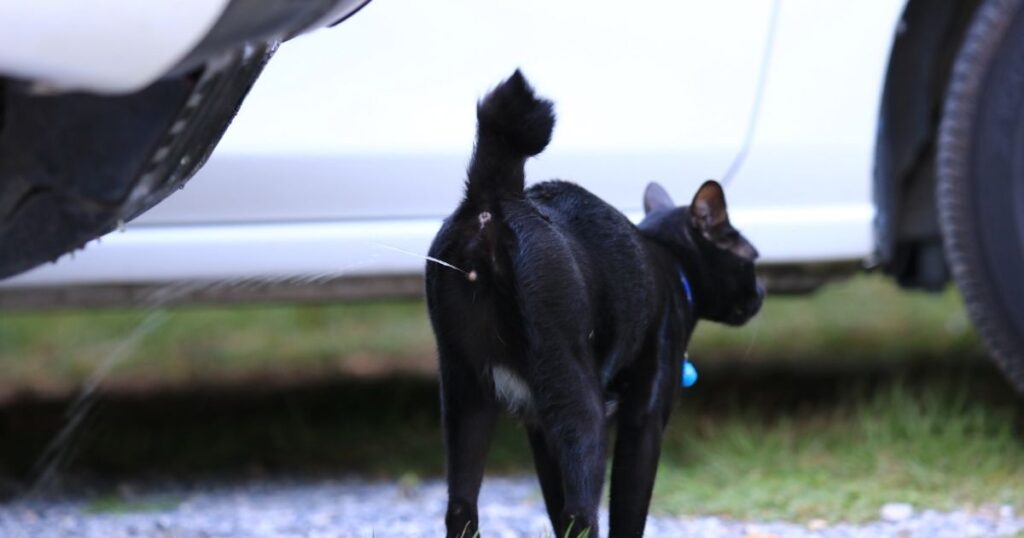
Cat peeing outside the litter box is not spite. Urinary infections, bladder stones, kidney disease, diabetes, joint pain, and stress can all trigger accidents. Senior cats may also develop cognitive changes. Sudden changes deserve a vet visit, especially if your cat strains or cries.
Track what you see: how often your cat pees, whether urine looks bloody, and whether your cat visits the box often with little output. Notes and photos help your vet reach a diagnosis faster.
Our guide on why cats pee outside the box covers causes and fixes in detail.
FAQs About Cat Pee on Clothes
Should I wash cat urine out in hot or cold water?
Cold water works best for the first rinse and the soak. Hot water can set the stain and trap the smell, so save warm washes for after the enzyme soak, and only if the care tag allows it.
How well does vinegar remove cat pee smell?
Vinegar neutralizes some ammonia, but it does not break down urine crystals. Use it after an enzyme soak, not as the only fix.
Which detergent works best on cat urine?
Enzyme-based laundry detergents work best because they target the odor source. Check labels for protease or similar enzymes, and avoid fragrance-only products.
How long can soiled clothes wait before washing?
Wash within a day if possible. Dried urine crystals are harder to remove, so rinse and soak early even when you cannot run a full load.
Why does my cat keep peeing on my clothes?
Your scent comforts stressed cats, and soft fabric feels like litter. Rule out pain or infection first, then add boxes and reduce stress at home.
Final Steps
Treat the stain, then treat the cause. Book a vet exam if accidents continue for more than a few days, and read our guide to cat hair loss for another common problem.
Related Posts



Previous Post
Next Post