Now Reading: Human Foods Dogs Can Have: A Vet-Checked List
- 01
Human Foods Dogs Can Have: A Vet-Checked List

Certified veterinarian. Last reviewed and updated: November 10, 2026. See our editorial and veterinary review policy.
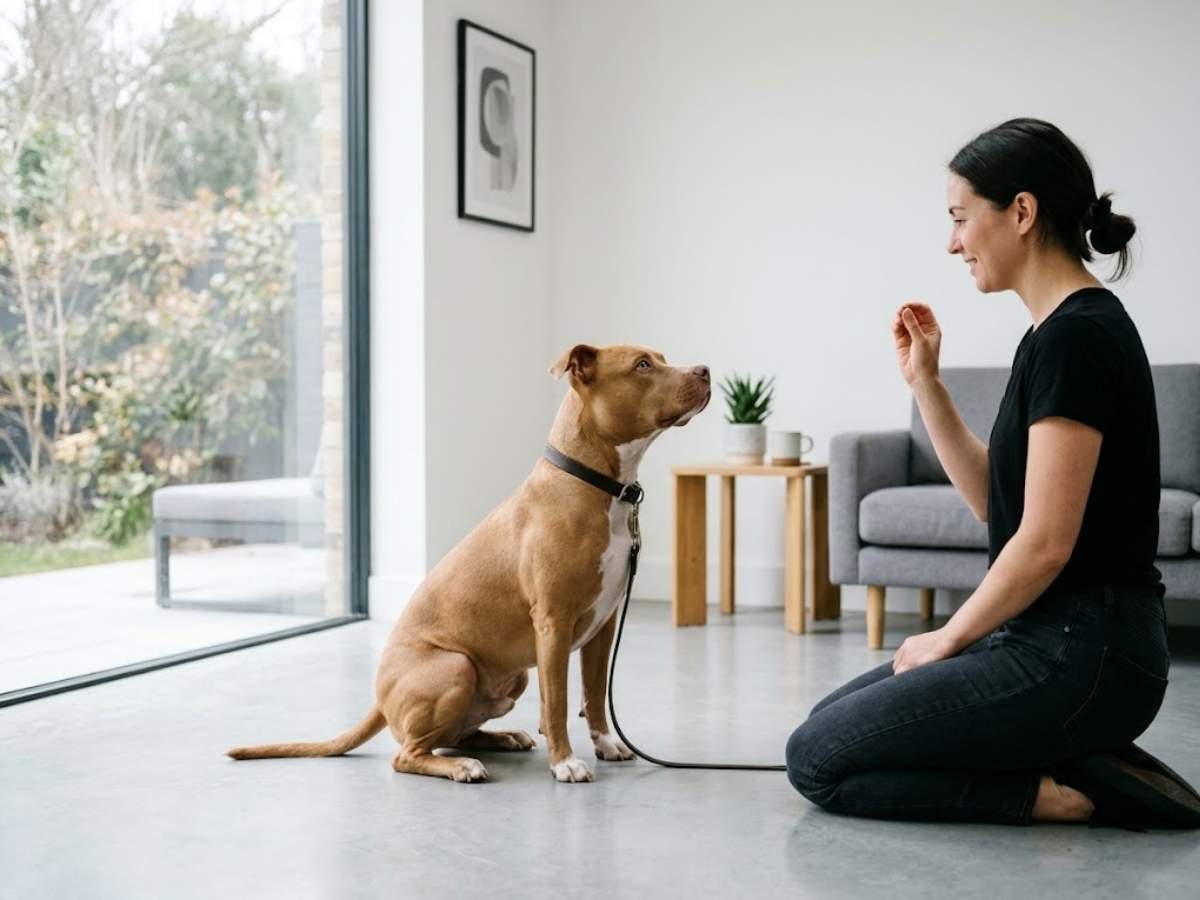
Your dog stares at your plate, and you wonder whether one bite is harmless. Many human foods are fine for dogs. Others are dangerous, and the line between them is not always obvious.
Below is a vet-checked list of what dogs can eat, how to serve it, and which foods to keep out of reach.
Medically reviewed by Dr. Rida Batool, DVM. Dogs with health conditions or special diets should get food advice from their own vet.
Ground rules before you share your plate
- Keep treats and extras to about 10% of your dog’s daily food
- Introduce one new food at a time, in a small amount
- Serve plain: no salt, butter, oil, sauces or seasoning
- Cut food small enough to prevent choking, especially for little dogs
- Skip anything your dog has reacted to before
Human foods dogs can eat safely
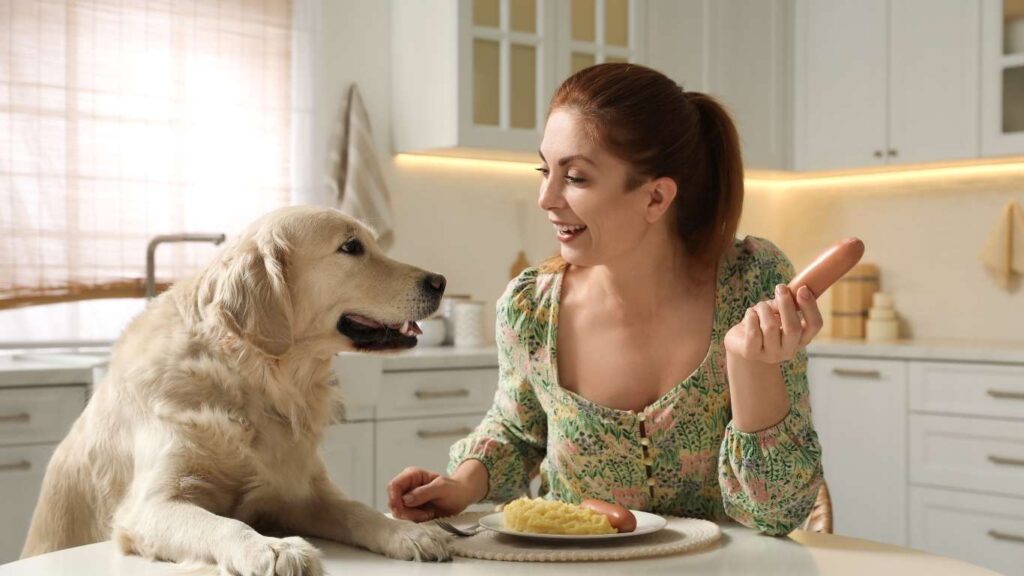
| Food | How to serve it | Watch for |
|---|---|---|
| Carrots | Raw or cooked, in bite-size pieces | Whole carrots can choke small dogs |
| Cooked chicken | Plain, boneless and skinless | Cooked bones can splinter |
| Plain cooked eggs | Boiled or scrambled without oil | Skip salt and butter |
| Cooked white rice | Small plain portions | Too much adds empty calories |
| Peanut butter | A small lick, xylitol-free only | Xylitol is toxic to dogs |
| Plain pumpkin | A spoonful of cooked puree | Skip pie filling and spices |
| Green beans | Plain, steamed or raw | Avoid canned beans with salt |
| Cooked salmon | Fully cooked, boneless | Raw fish can carry parasites |
| Cooked sweet potato | Plain and mashed or diced | No sugar or marshmallow toppings |
Fruits that make safe treats
Fruit works as an occasional treat because it contains natural sugar. Offer small pieces and remove seeds, pits and rinds.
- Watermelon: seedless, rind removed
- Bananas: a few slices, since they are sugary
- Blueberries: whole or frozen, a handful at most
- Strawberries: sliced, in small amounts
- Apple: slices without core or seeds
- Mango: peeled, with the pit removed
Vegetables worth adding
Crunchy vegetables are low in calories and good for dogs that need to lose weight. Broccoli and celery are fine in small, chopped pieces. Ripe tomatoes are safe, while green tomato plants are not. Our guide on tomatoes for dogs covers the details.
Nuts, popcorn and other snacks
- Plain popcorn: air-popped, with no butter or salt, and no unpopped kernels
- Peanuts: unsalted and in small amounts, since they are fatty
- Cashews: a few at most, unsalted
- Almonds, walnuts and pistachios: better skipped, as shells and mold can cause trouble
Portion sizes depend on your dog
A Great Dane and a Chihuahua need very different amounts. Start with a piece the size of your dog’s kibble, then watch for loose stools or itching over the next day.
Small dogs need smaller pieces and fewer extras, since a few treats can make up a large share of their daily food.
Foods dogs should never eat
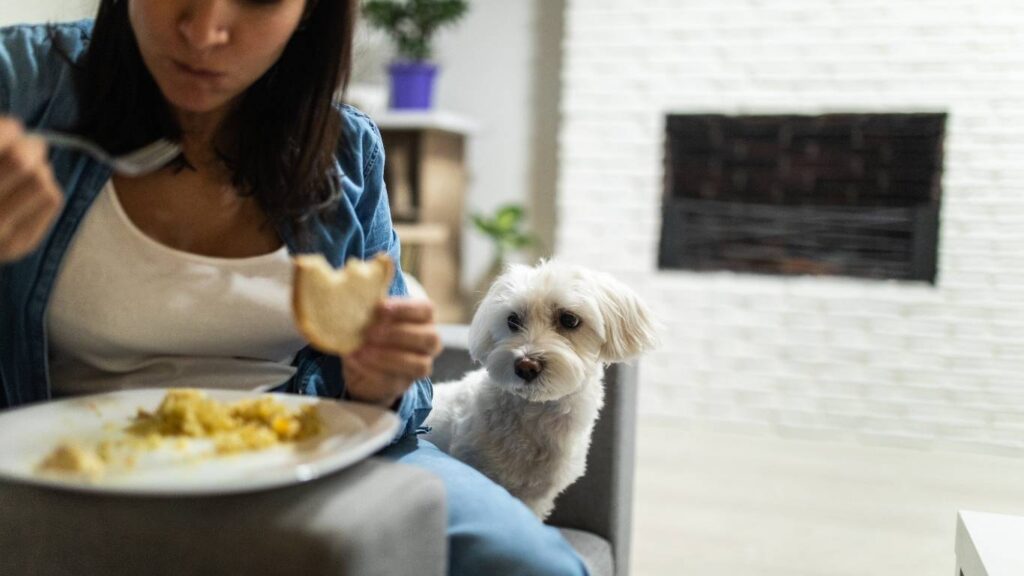
Some everyday foods are toxic. Keep these out of reach and tell everyone in the house:
- Chocolate and cocoa products
- Grapes and raisins
- Onions, garlic, chives and leeks
- Anything containing xylitol, including some peanut butters, gum and baked goods
- Macadamia nuts
- Alcohol and raw yeast dough
- Coffee, tea and other caffeine
- Cooked bones, which splinter and cause blockages
If your dog swallows one of these, call your vet or a pet poison helpline right away. Read what to do in our chocolate guide, since waiting for symptoms can cost valuable time.
Foods that need extra caution
- Cheese and milk: many dogs are lactose intolerant, so offer tiny amounts at most
- Ham and bacon: high salt and fat can upset the stomach or trigger pancreatitis
- Fatty trimmings: rich leftovers are a common cause of vomiting
- Cat food: richer than dog food, as covered in our cat food guide
When human food causes trouble
Vomiting, diarrhea or a gassy stomach after a new food usually settles within a day. Skip the treat and offer water. Our upset stomach guide explains home care.
Contact your vet if your dog vomits repeatedly, seems lethargic, has bloody stool or ate a toxic food. Dogs with allergies need a vet-guided diet, as covered in our guide to the best dog food for allergies.
Stopping the begging habit
Feeding from the table teaches dogs to beg. Put a safe snack in their bowl at the end of the meal instead, and keep your plate out of reach.
Consistency helps. Every person in the house needs to follow the same rule, or your dog will keep trying the soft touch.
Questions owners ask most
Plain cooked chicken, carrots, green beans, pumpkin and cooked eggs are common safe choices. Serve small portions without salt, oil or seasoning.
Keep treats and extras to about 10% of daily food. Everything else should be a complete dog food that meets your dog’s needs.
Puppies can try some plain foods, such as cooked chicken or carrot, in tiny amounts. Their stomachs are sensitive, so check with your vet before adding extras.
Chocolate, grapes, raisins, onions, garlic and anything with xylitol top the list. Call your vet immediately if your dog eats any of them.
Sources and Further Reading
Related Posts
Previous Post
Next Post