Now Reading: Quick Guide: Giving Benadryl for Dogs’ Allergies
- 01
Quick Guide: Giving Benadryl for Dogs’ Allergies
Quick Guide: Giving Benadryl for Dogs’ Allergies

Certified veterinarian. Last reviewed and updated: November 10, 2026. See our editorial and veterinary review policy.
Itchy skin, a swollen face after a bee sting, a dog that will not stop sneezing. Benadryl for dogs is one of the first things many owners reach for, and it can help when the dose and product are right.
Below you will find the dose by weight, the products to avoid, the conditions that rule it out, and the signs that mean a vet visit cannot wait.
Medically reviewed by Dr. Rida Batool, DVM. Confirm the dose with your own vet before the first tablet, since the right amount depends on your dog’s health and any other medicine.
Meet diphenhydramine, the active ingredient
Benadryl is a brand name. Diphenhydramine is the antihistamine inside it, and it blocks the histamine your dog’s body releases during an allergic reaction.
That is why it eases itching, sneezing, watery eyes and mild swelling. It also causes drowsiness, which explains why some vets use it for motion sickness.
Can dogs take Benadryl safely?
Most healthy adult dogs handle it well at the correct dose. Vets suggest it for mild allergic reactions, insect stings and itchy skin.
Product choice matters as much as dose. Look for plain diphenhydramine and nothing else on the label:
- No decongestants such as pseudoephedrine or phenylephrine
- No acetaminophen (the ingredient in Tylenol), which is toxic to dogs
- No xylitol or alcohol in liquid formulas
- No time-release capsules, which release too much at once in a small body
Benadryl for dogs dosage by weight
Vets commonly use 2 to 4 mg per kilogram of body weight, which is close to 1 mg per pound. Doses are repeated every 8 to 12 hours, up to three times a day.
| Dog weight | In kg | Tablet or capsule dose | Liquid dose (12.5 mg per 5 ml) |
|---|---|---|---|
| 10 lb | 4.5 kg | 10 mg | 4 ml |
| 20 lb | 9 kg | 20 mg | 8 ml |
| 30 lb | 13.6 kg | 30 mg | 12 ml |
| 40 lb | 18 kg | 40 mg | 16 ml |
| 50 lb | 22.7 kg | 50 mg | 20 ml |
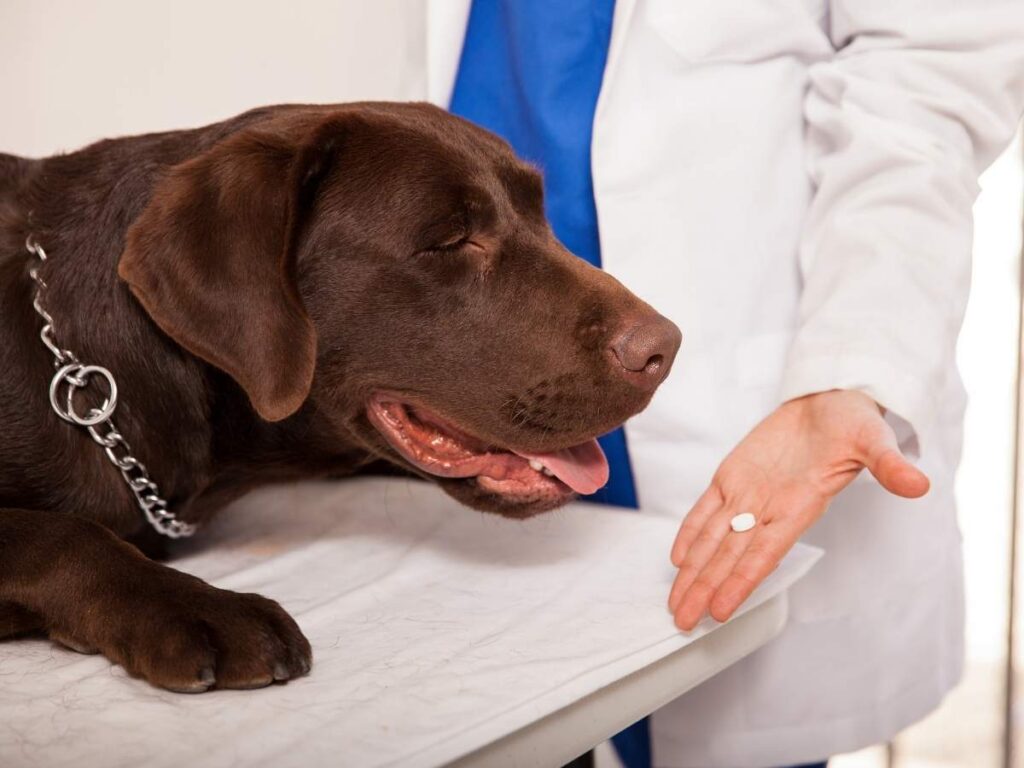
Standard adult tablets contain 25 mg, so a 25 lb dog gets one whole tablet. Pill cutters help with smaller amounts. Dogs over 50 lb need an exact dose from the vet rather than a guess scaled up at home.

How to give it without mistakes
- Check the label for diphenhydramine as the only active ingredient
- Weigh your dog instead of estimating
- Measure liquid with an oral syringe, not a kitchen spoon
- Tuck the tablet into a small soft treat if your dog spits pills
- Watch your dog closely for the first hour
- Write down the time of each dose so nothing doubles up
Puppies need extra caution
Very young puppies react more strongly to sedation and small dosing errors. Skip home dosing under 12 weeks and call your vet instead.
Older puppies sometimes get it, but only at an amount worked out for their exact weight by a vet.
Does it calm an anxious dog?
Some owners give it before car rides or fireworks because it causes sleepiness. Results vary, and a few dogs turn restless instead of relaxed.
Diphenhydramine does not treat anxiety itself. Dogs that panic often need a behavior plan or prescription help, such as trazodone for dogs, chosen by a vet.
Skip it if your dog has these conditions
- Glaucoma
- Heart disease or high blood pressure
- Urinary blockage or an enlarged prostate
- Seizure disorders
- Liver or kidney disease
- Pregnancy or nursing
- Sedatives, antidepressants or other anticholinergic medicines
Side effects and overdose signs
Drowsiness, dry mouth and a mildly upset stomach are the usual effects at a normal dose.
Call your vet or a pet poison helpline right away if you see any of these:
- Extreme sleepiness or unusual agitation
- Fast heartbeat or fast breathing
- Dilated pupils
- Tremors or seizures
- Collapse

When Benadryl is the wrong move
Trouble breathing, a rapidly swelling face, hives across the body, repeated vomiting or collapse call for an emergency vet. Do not wait for a tablet to work.
When the scratching never stops
Year-round itching means Benadryl is a short-term patch at best. Ask your vet about allergy testing, medicated shampoo, prescription options such as Apoquel, or an elimination diet.
Food can be a trigger as well. Our guide to the best dog food for allergies explains what vets look at first.
If skin testing is planned, your vet may ask you to stop antihistamines for about two weeks beforehand.
Benadryl questions owners ask most
About 25 mg, which equals one standard adult tablet, every 8 to 12 hours. Confirm with your vet first, particularly if your dog takes other medicine.
Vets commonly use 2 to 4 mg per kilogram, roughly 1 mg per pound, up to three times daily. The weight chart above shows the numbers by size.
Relief usually starts within 30 to 60 minutes. Drowsiness can last several hours.
Sleepiness, dry mouth and mild stomach upset are the most common. Tremors, seizures or a racing heartbeat point to an overdose and need a vet right away.
Sources
Related Posts


Previous Post
Next Post