Now Reading: When to Start Puppy Classes: Your Age-by-Age Training Roadmap
- 01
When to Start Puppy Classes: Your Age-by-Age Training Roadmap


Certified veterinarian. Last reviewed and updated: November 10, 2026. See our editorial and veterinary review policy.
When to start puppy classes: the timing nobody explains
You bring this tiny warm creature home, you’re completely in love, and then approximately three hours later you’re Googling “why is my puppy crying” at 2am with a treat in one hand and a chew toy in the other. I’ve been there, not as a new owner, but as a vet watching hundreds of families go through exactly this spiral. And the question that almost always comes next is: when to start puppy classes?

The answer is not what most people expect. And getting it wrong, going too early, waiting too long, or skipping classes entirely …. shapes the dog your puppy becomes for the next 10 to 15 years.
So let’s talk about it properly.
You might need to go through it too: Funny Boy Dog Names That Make People Smile
Straight Answer to when to start puppy classes
Home training can begin the day your puppy arrives, usually around 8 weeks. Group puppy classes typically start between 8 and 16 weeks, as long as your puppy has had at least one round of core vaccines seven days before the first session.
That’s the short version. But the longer version is what actually helps you.
What Age Do You Even Get a Puppy?
Most reputable breeders send puppies home at 8 weeks. That’s the sweet spot. Before 8 weeks, puppies are still in a critical bonding phase with their littermates and mother, separating them too early creates anxiety issues that follow them for life.
If you’re adopting from a shelter, puppies are sometimes available younger, sometimes older. Either way, training starts the day they arrive. Not next week. Not after they “settle in.” The day they walk through your door, they start learning what your household looks, sounds, and feels like, and that is training.
Puppy Training Stages: What’s Actually Happening in That Small Brain
Understanding why timing matters for puppy classes starts with understanding how puppies develop.
7–12 weeks: The Fear Imprint Window Everything your puppy experiences right now, people, sounds, textures, other animals, leaves a deep impression. Positive experiences build a confident adult dog. Scary ones can create lifelong fear responses. This is why early socialization matters more than early formal obedience.
12–16 weeks: The Learning Peak This is prime time. Attention spans are long enough for short training sessions. The brain is absorbent. Basic commands like sit, stay, come, and leave it click fast during this window. Most good group puppy classes are designed specifically for this age range.
4–6 months: The Testing Phase Your puppy knows the rules. They’re just checking if you actually mean them. Consistency is everything here. This is when owners who skipped early structure start struggling.
6–8 months: Welcome to Teenage Dog Your sweet puppy has opinions now. An 8-month-old dog behavior shift catches a lot of owners off guard, suddenly they’re selective about commands, easily distracted, and occasionally downright defiant. This is completely normal adolescence. It’s not your training failing. It’s their brain doing what adolescent brains do. Keep going.
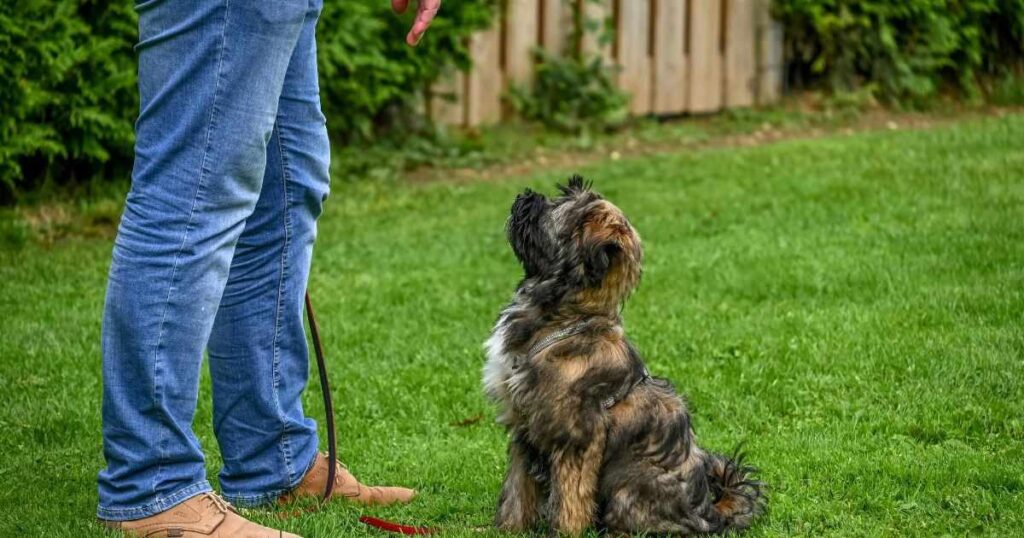
When to Start Puppy Classes: The Real Timeline
Here’s how to think about it based on your puppy’s age:
8 weeks
Start training at home immediately. Sit, name recognition, basic leash introduction. Keep sessions 5 minutes max.
9–11 weeks
If your vet has given the okay and your pup has had their first vaccines, some puppy socialization classes are available. These focus more on exposure than obedience, which is exactly right for this age.
12–16 weeks
The ideal window to enroll in formal group puppy classes. Most facilities require proof of at least the first DHPP vaccine. This is the non-negotiable sweet spot that vets and trainers agree on.
16–20 weeks
Still absolutely fine. Don’t panic if you missed the earlier window. The brain is still very receptive. Just know that the earlier bad habits form, the more work they need later.
6 months and beyond
Group classes transition to adolescent or beginner adult obedience. Dog training for adult dogs follows the same positive reinforcement principles, it just requires a bit more patience because old habits are stickier.
Can I Carry My Puppy Outside Before Vaccinations?
Carrying is fine, and it helps.
Carrying your puppy in your arms or in a bag to busy places before vaccines are complete is genuinely helpful for socialization. What you’re avoiding is letting their paws touch unknown ground…. sidewalks, dog parks, pet store floors…. where viruses like parvo can survive for months.
Car rides, outdoor café patios where you can hold them, friends’ homes with vaccinated dogs, your own yard, all fair game. Just keep those paws off public ground until the vaccine series is done, usually around 16 weeks.
How to Take Care of a 2-Month-Old Puppy
A 2-month-old puppy needs four things above everything else: food, sleep, bathroom trips, and brief positive interactions with the world.
Sleep: 16 to 18 hours a day. Not a joke. A tired puppy is a cranky puppy who learns nothing.
Food: Three to four small meals a day at this age. Never free-feed a puppy, it wrecks house training and hides appetite changes that might signal illness.
Bathroom: Take them out every 1 to 2 hours, right after eating, right after waking, right after play. Every single time they go outside, celebrate it like they just won a trophy.
Training: 5-minute sessions, twice a day. Sit. Their name. Come. That’s it.
Also Read: Workout Dog: Fun and Safe Ways to Stay Fit Together
Puppy Feeding Schedule and Dog Feeding Schedule by Age
One of the most common things new owners get wrong is the feeding schedule. Here’s a simple breakdown:
| Age | Meals Per Day | Portion Guide |
| 8–12 weeks | 4 meals | Follow breed-specific puppy food label |
| 3–6 months | 3 meals | Adjust as they grow |
| 6–12 months | 2 meals | Transition to adolescent portions |
| 12 months+ | 2 meals | Adult food for most breeds |
Stick to a schedule. Same times every day. It regulates digestion, makes house training predictable, and gives your puppy the structure their brain craves.
Best Puppy Schedule: What a Good Day Actually Looks Like
The best puppy schedule isn’t complicated. It’s just consistent.
- 6:30 AM: Outside immediately on waking
- 7:00 AM: First meal
- 7:15 AM: Short training session (5 minutes, sit/name/come)
- 8:00 AM: Nap
- 10:00 AM: Playtime, outside bathroom break
- 12:00 PM: Second meal
- 12:15 PM: Outside, then nap
- 3:00 PM: Second training session
- 5:30 PM: Third meal
- 6:00 PM: Outside, socialization or calm interaction
- 9:00 PM: Final bathroom break, settle for the night
Puppies thrive on knowing what comes next. So do their owners, honestly.
Must Read: Old English Sheepdog: Everything You Need to Know Before Getting One
How Long Does It Take to Train a Dog?
The honest answer: basic commands take days to weeks.
Reliably well-mannered dog takes 6 to 12 months of consistent daily practice.
Fully trained dog, one that listens in distracting environments, walks nicely on a leash, and responds even when a squirrel is involved, takes 1 to 2 years.
Training is never really finished. It’s a relationship, not a checklist.
What changes with age is the kind of training. An 8-month-old dog behavior challenge looks nothing like a 12-week-old challenge. Adolescent dogs need you to go back to basics with more distractions, not new commands. Repetition in harder environments is what actually builds reliability.
Dog Training for Adult Dogs: Is It Too Late?
It is never too late.

The idea that you can’t teach an old dog new tricks is one of the most damaging myths in the pet world. Adult dogs learn differently than puppies, they have longer attention spans, they’re less distracted, and they often want the mental stimulation that training gives them.
What changes is the timeline. An adult dog with established habits needs more repetition and more patience before new behaviors replace old ones. But it happens. Every single time.
FAQs
Home training can begin at 8 weeks with five-minute sessions of sit, name recognition and come. Group classes usually follow between 8 and 16 weeks, once the first vaccines are in.
Most reputable programs accept puppies at 7 to 8 weeks for socialization-focused classes, provided they’ve had at least one vaccine round. Group obedience classes typically start at 12 weeks.
Carry them, but keep their paws off unknown ground. Socialization during the vaccine window is actually critical for development.
Probably not. Eight-month-old dog behavior changes are a hallmark of canine adolescence. Go back to basics, stay consistent, don’t raise your voice. It passes.
With daily practice starting from 8 weeks, most puppies walk reasonably well by 4 to 5 months. Reliable loose-leash walking in distracting environments takes closer to 6 to 9 months.
A schedule matters for house training, portion control, and catching illness early. Free feeding makes all three harder. Stick to set meal times from day one.
Written by Dr.Rida Batool (Certified Veterinarian) from mypetpit, a community for petowners who want real answers, not generic advice.
Related Posts
Previous Post
Next Post